Thinking about future society,
starting from everyday life with quantum technology.
Quantum technology could bring an industrial revolution and social transformation on the scale of semiconductors and the internet. In a society where quantum technology is taken for granted, how will science, industry, everyday life, and institutions change? We use SF prototyping to make everyday situations concrete, workshops to discuss them with diverse participants, and future-design analysis methods to estimate the impact of technologies. Combining forecasting, which looks ahead from the present, with backcasting, which looks back from an imagined future, we consider possible futures, the conditions needed to realize them, and the questions to address today.
The question
How would we want to live in a society where quantum technologies are part of everyday life?
Approach
Describe future everyday situations
We use SF prototyping to describe possible everyday situations and social settings. Scenarios and stories provide material for examining how technologies might be used and how they might affect society.
Discuss expectations, concerns, and conditions
Workshops and dialogue help identify use cases, the conditions that make them meaningful, and the expectations and concerns around them.
Estimate the future impact of technologies
We combine methods from futures studies to assess how a technology affects society, the economy, and the environment. The Futures Wheel lays out ripple effects, systems thinking organizes causal pathways, and scenarios and simulation gauge their scale.
Connect the present and the future in both directions
We use forecasting, which looks ahead from today's technologies and trends, together with backcasting, which looks back from an imagined future. Together with an examination of ethical, legal, and social implications (ELSI), this helps us identify the questions to address today.
Imagined future scenes with quantum technology
These scenes, informed by research, show how quantum technology might be used in society. They are grouped into quantum computing, the quantum internet, and quantum sensing. Choose a scene to see an animated diagram of the technology at work.
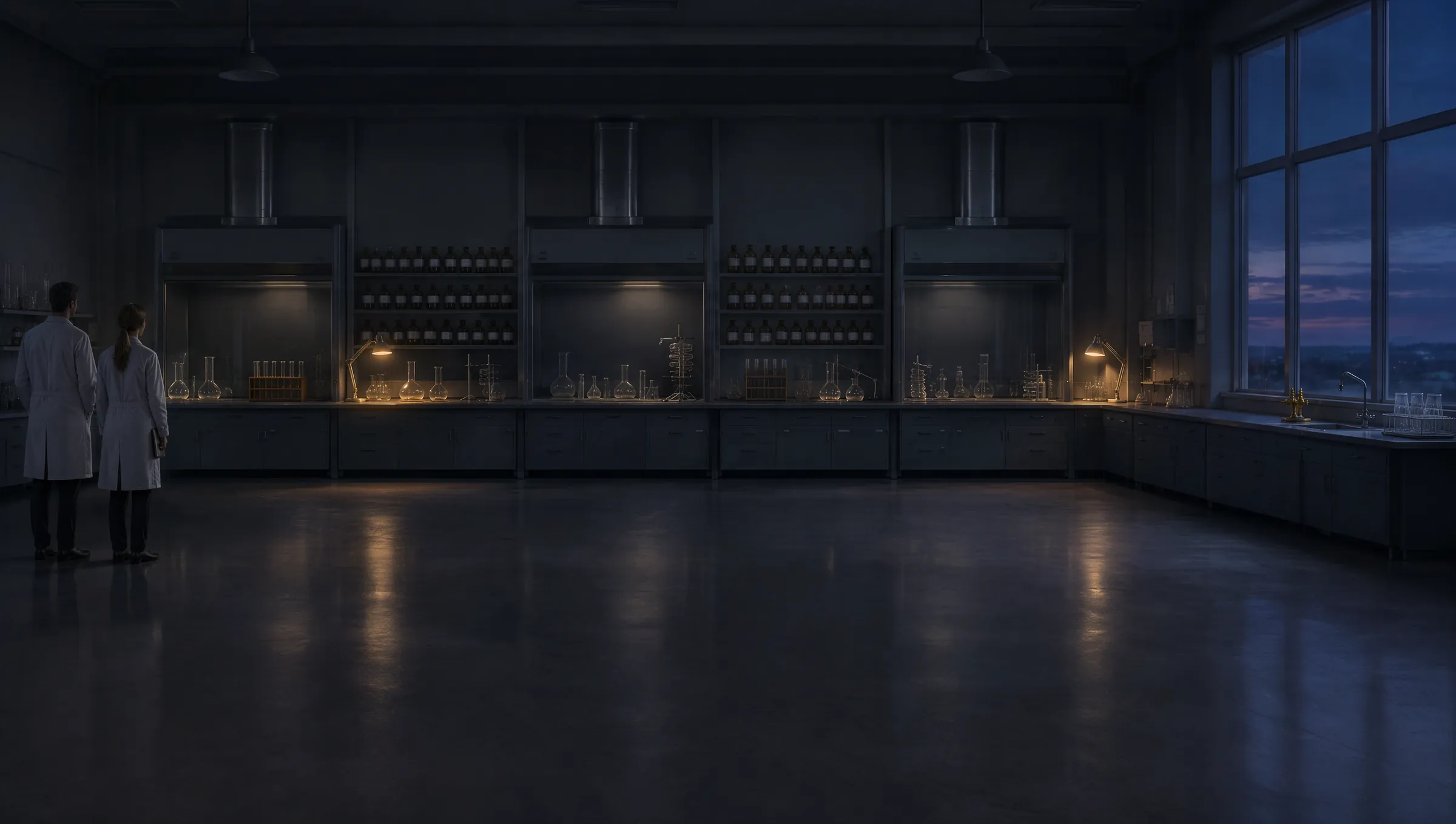
Copying a whole molecule onto qubits
A molecule whose electron arrangement is unsettled and hazy is copied as it is onto a lattice of many qubits, and its structure is resolved.
The role of quantum technology
Reproducing the behavior of electrons in a molecule with qubits is regarded as one of the promising uses of quantum computers. One estimate suggests that molecules too large for exact classical treatment would need on the order of 100,000 physical qubits. The number and layout of qubits in the diagram are schematic, not a specification of a real machine.
Resource estimates for molecular quantum computation (preprint)What the animation shows
The hazy shape of the molecule is copied onto a lattice of qubits; when their flickering settles, the structure of the molecule appears clearly.
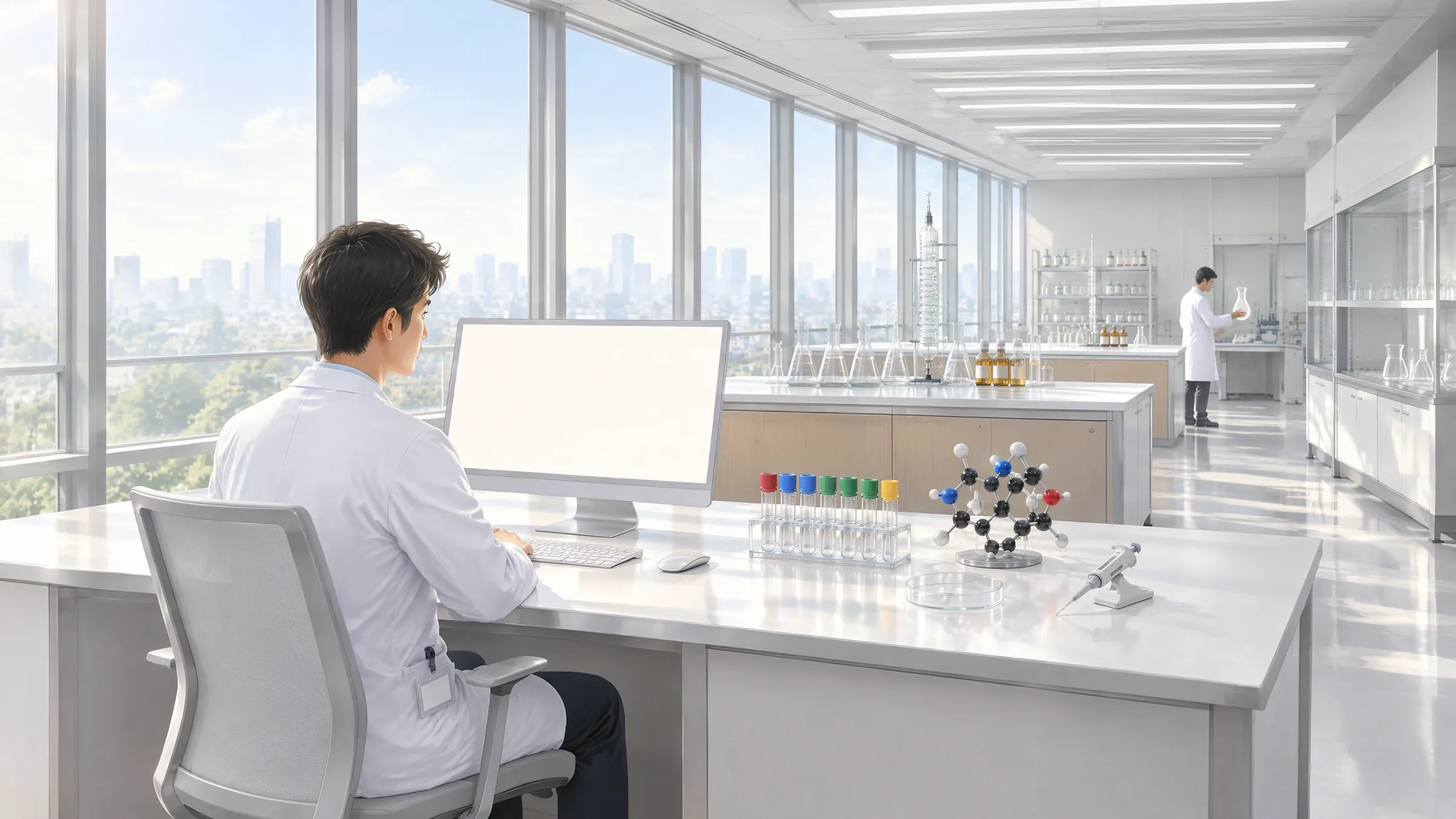
Finding a molecule that fits the disease target
Many medicines work by fitting into a pocket of a protein involved in a disease and stopping it from working. Whether a shape fits the pocket can be checked on today’s computers. The hard part is how strongly a molecule that fits will bind, which is decided by the exchange of electrons where they touch. This scene imagines classical computation narrowing the candidates to shapes that fit, and quantum computation confirming how strongly each binds.
The role of quantum technology
How a molecule binds to a protein is decided by the behavior of electrons where they touch. For enzymes that contain metals, among others, that calculation becomes hard for classical computers. For an enzyme involved in drug metabolism, researchers have estimated the size of quantum computer needed and where classical methods reach their limit. Whether quantum computation will actually improve predictions of binding strength has not been confirmed. Narrowing down candidates by calculation still leaves trials before anything becomes a medicine. Narrowing down the number of candidates is something classical computation does well; the part quantum computation takes on is calculating the remaining candidates accurately. It does not search all candidates at once. The shapes, the number of bonding places and the bar lengths are schematic too.
Resource estimates for a drug-related enzyme (PNAS)What the animation shows
A target protein with a pocket appears, along with two candidate molecules. They have the same shape but different kinds of atom: the blue circles are atoms of a kind that attracts electrons readily. Candidate A has one, at its tip; candidate B has three, at all its ends. Candidate A descends first and fits the pocket exactly. The three places where molecule and pocket touch flash as light-blue dotted lines while the quantum computation checks whether electrons are shared there. Only the place with the blue atom has bonded; the other two are marked with a cross. Candidate A wobbles in the pocket, and its bar under “Binding strength” stops short and is marked weak. Candidate A leaves and candidate B fits in the same way. This time all three places bond with thick yellow lines, the molecule stays still, and the bar grows long and is marked strong. Finally the vials on the bench light up.
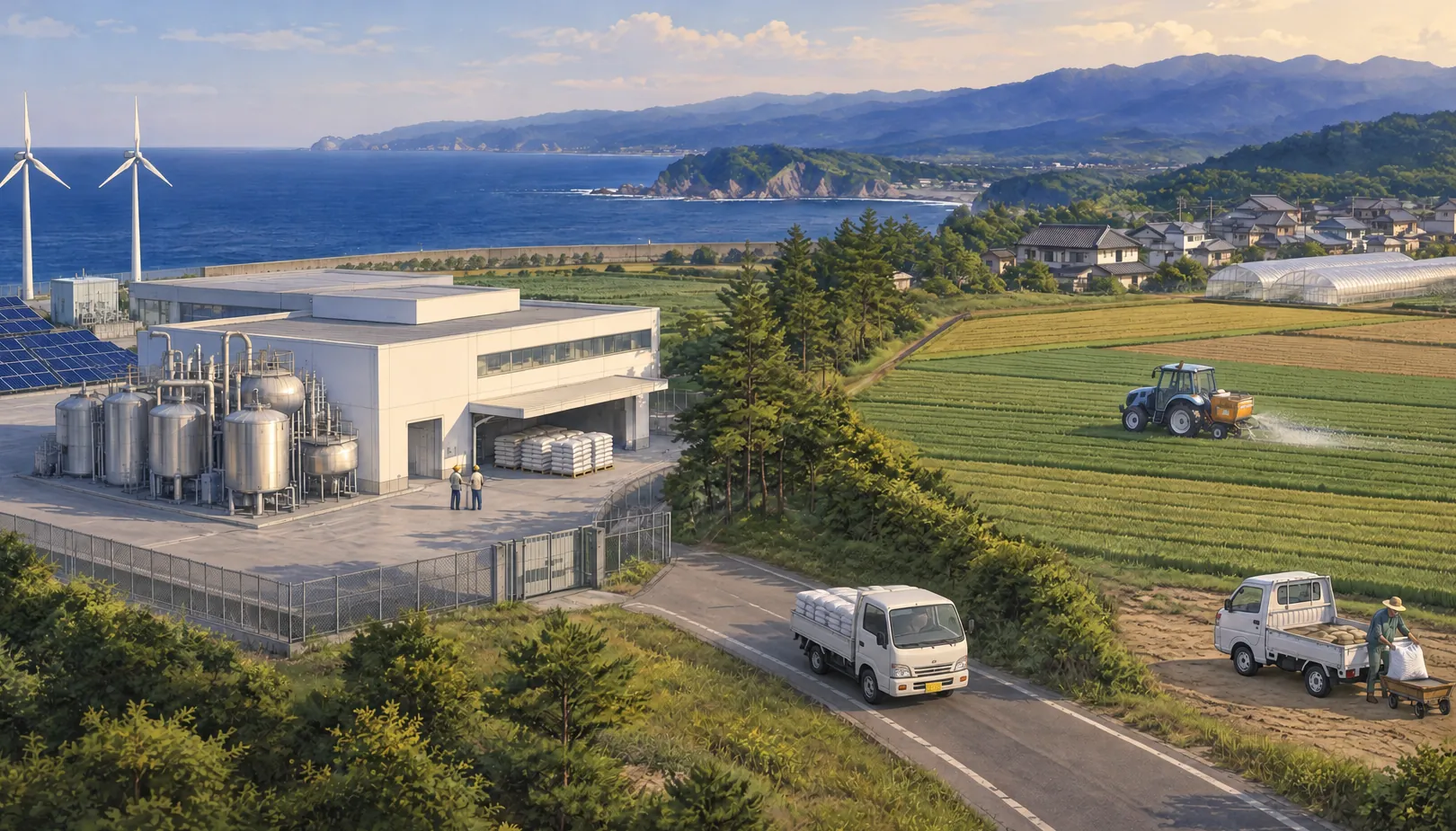
Fertilizer from air, with less energy
Ammonia, the basis of fertilizer, is made from nitrogen in the air. Today’s Haber–Bosch process needs high temperature and pressure and consumes a great deal of energy. Bacteria do the same thing at ordinary temperature and pressure. This scene imagines quantum computation revealing how, so that local plants can make fertilizer and deliver it to nearby fields.
The role of quantum technology
The core of the bacterial enzyme has such a complex electronic state that classical computation cannot settle how the reaction proceeds. Researchers have studied how a quantum computer could examine this reaction and how large it would need to be. Understanding the mechanism does not guarantee an industrially usable catalyst. The size of the energy reduction in the picture is schematic.
Studying nitrogen fixation on quantum computers (PNAS)What the animation shows
The hazy, unsettled structure of a catalyst is resolved by quantum computation. Nitrogen arrives from the upper left and hydrogen from the lower left; the nitrogen splits in two and leaves to the right as ammonia. The bar for the energy needed with the new catalyst drops well below the one for Haber–Bosch. Finally the fertilizer truck heading for the fields lights up, followed by the field being fertilized, which glows green.

Estimating tomorrow’s risk before morning
Late at night in a bank’s risk room, staff try an enormous number of possible market moves for tomorrow to estimate how likely each size of loss or gain is. In theory, quantum computation needs only the square root of the effort for the same accuracy. This scene imagines checking more cases in less time.
The role of quantum technology
With conventional sampling, halving the error takes four times as many trials. Quantum computation has been shown in theory to need only twice as many. But estimates suggest that a practical advantage in pricing financial products would need thousands of error-corrected qubits running very fast. The amounts, probabilities and difference in speed on the screen are schematic. The bundle of light-blue lines pictures what is inside the superposition; the paths cannot all be read out at once.
A threshold for quantum advantage in derivative pricing (Quantum)What the animation shows
The view moves in on the wall screen, which has two rows: quantum computation above, conventional computation below. Each row shows, from the left, price paths, a bar chart of the probability of each profit or loss (red for losses on the left, green for gains on the right, white lines for the margin of error) and progress. The conventional run tries price paths one at a time, so its lines accumulate slowly, its bars stay faint and keep swinging, and it reaches only about 40% in the same time. The quantum run handles all the paths in superposition from the start: a bundle of light-blue lines appears at once and shimmers, and the bars appear one by one and settle quickly. After it reaches 100%, examples of paths that lead to large losses are drawn out as red lines.
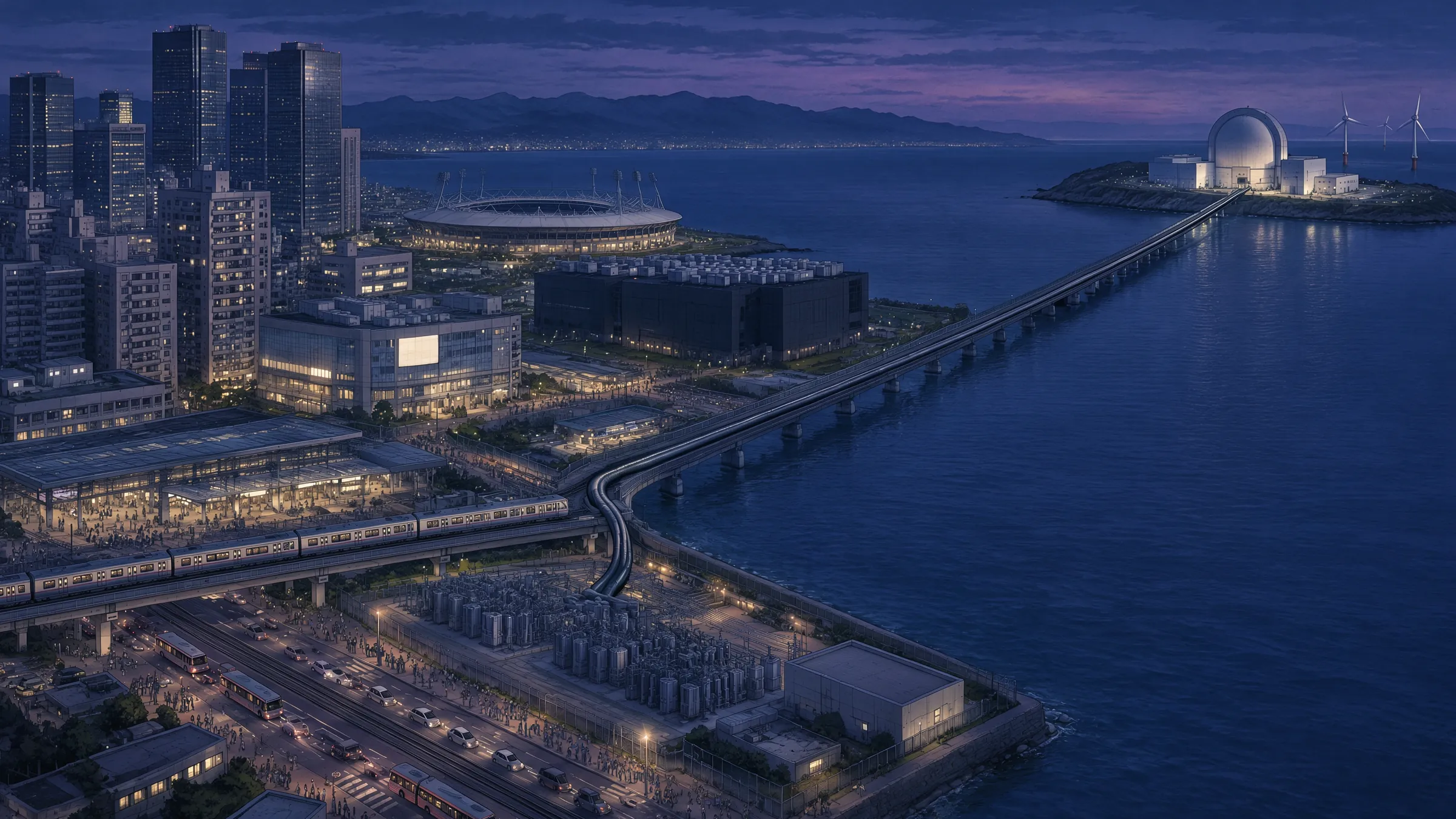
Delivering electricity without losing it
Part of the electricity made at a power station is lost as heat in the lines that carry it. Materials that lose less — above all superconductors, which have zero electrical resistance — could cut that loss sharply if they worked at higher temperatures. This scene imagines quantum computation revealing how such materials work and guiding the search for them.
The role of quantum technology
How superconductivity arises at high temperatures is not fully solved by classical computation, because the electrons influence one another strongly. Researchers have estimated the cost of simulating models of high-temperature superconductors on fault-tolerant quantum computers. Understanding the mechanism, finding a new material and installing it in a city grid are separate steps. No material that superconducts at room temperature has been found.
Resource estimates for simulating superconductor models (preprint)What the animation shows
At first the transmission cable, the feeders spreading from the substation and the districts they serve all glow red with heat haze. Inside an ordinary wire, electrons collide at random and their energy turns into heat. As soon as the quantum computation starts, electrons in the low-loss material pair up and flow smoothly. Back in the scene, the heat fades from the cable and feeders, which turn into light-blue flows, and the city lights grow brighter.
Finding the best match of ships and cargo
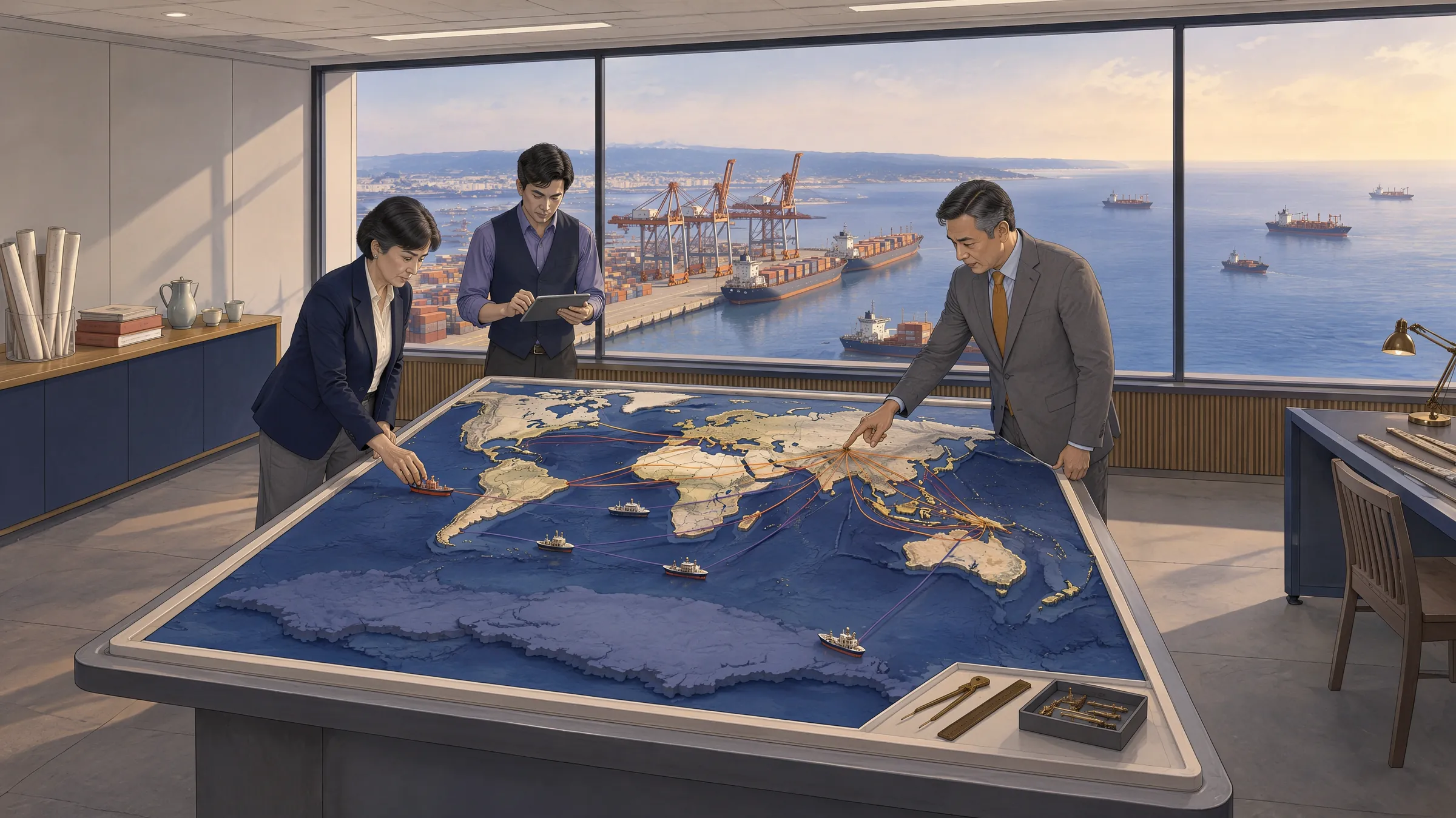
A trading company’s planning room overlooks a harbor. Which ship should carry which cargo, in what order? The number of combinations is astronomical, and the result is ships sailing empty and waiting at ports. This scene imagines quantum computation handling vast numbers of candidates to find routes with less waste.
The role of quantum technology
There is not yet a practical optimization problem for which quantum computation has been confirmed to be faster than classical computation. Which kinds of problem might benefit is still being researched, and no timescale can be given. This scene pictures a possibility; the size of the reduction shown is schematic.
Review of the potential and challenges of quantum optimization (preprint)What the animation shows
Over tangled, crossing orange routes, the quantum computation tries many candidates at once (purple lines). The routes settle into tidy light-blue ones, gray empty ships turn into white loaded ones, and the bar on the right for distance sailed empty and waiting time goes down.
A picture only at the pixels
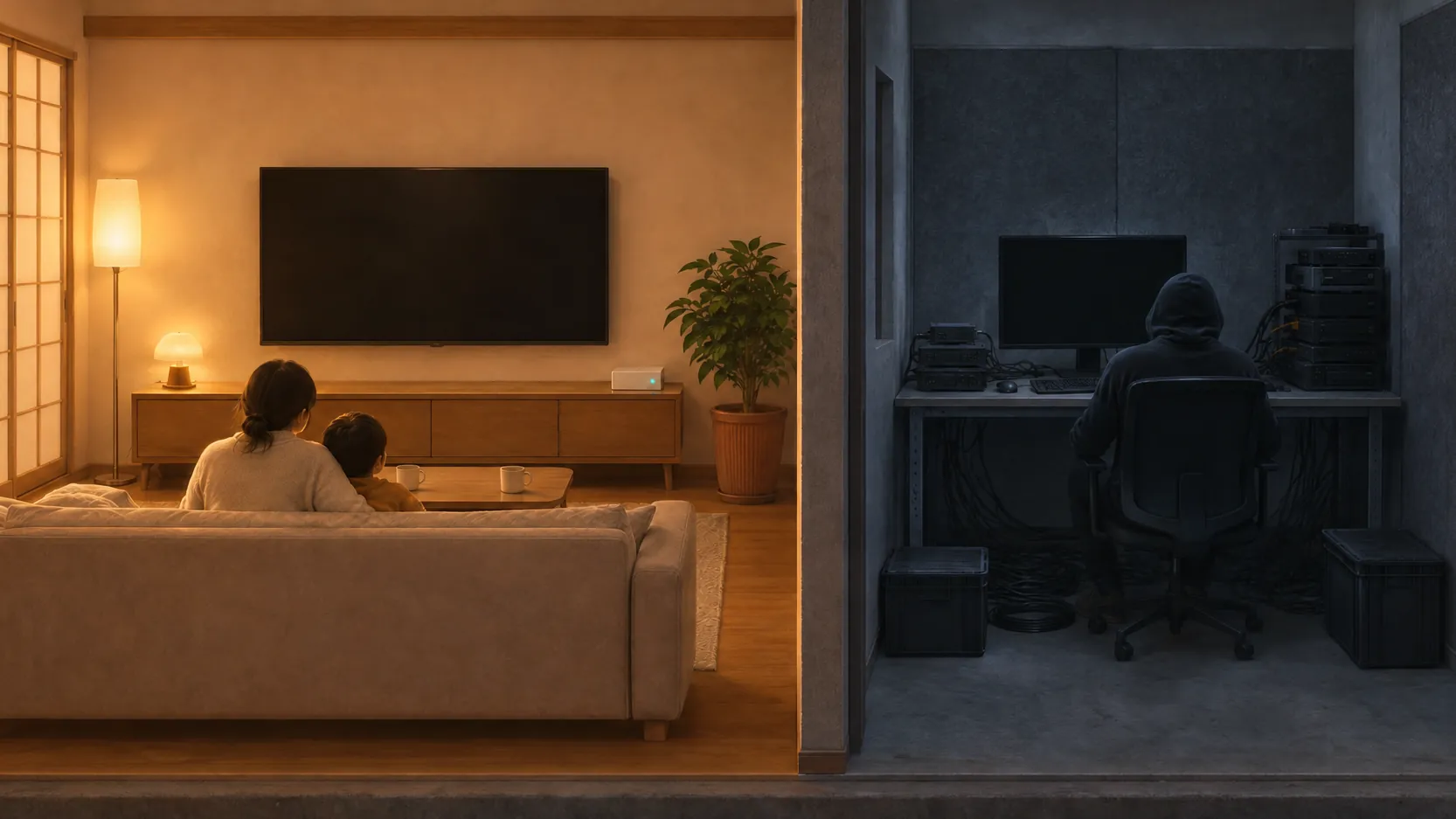
On the left, a parent and child watch a movie at home. On the right, somewhere else, a person tries to extract the video from their own player. This scene imagines the key to the video arriving as a quantum state right behind the TV’s pixels. A quantum state cannot be cloned, so the key cannot be copied to draw the same picture on another machine.
The role of quantum technology
Much piracy today relies on distributing keys extracted from players, or on capturing video inside a device after it has been decrypted. Theoretical work has proposed using the no-cloning property of quantum states to prevent copying of software and decryption keys. Delivering the key as a quantum state all the way to the pixels is an assumption made for this scene and has not been demonstrated. It would not stop someone filming the screen, and it would not end piracy.
Theory of quantum copy-protection (preprint)What the animation shows
Quantum keys arrive in both rooms along wavy lines from the ceiling. In the lower-left diagram the key is measured row by row just behind the pixels, the pixels take on color, and a sunset appears on the living-room TV. In the dim room the hooded person copies the key out of their own machine and sends it to the monitor along a jagged red line. The lower-right diagram tries to draw in the same way, but the pixels and the monitor show only gray noise, and question marks appear.
Delivering keys that even a quantum computer cannot crack, while detecting any tapping
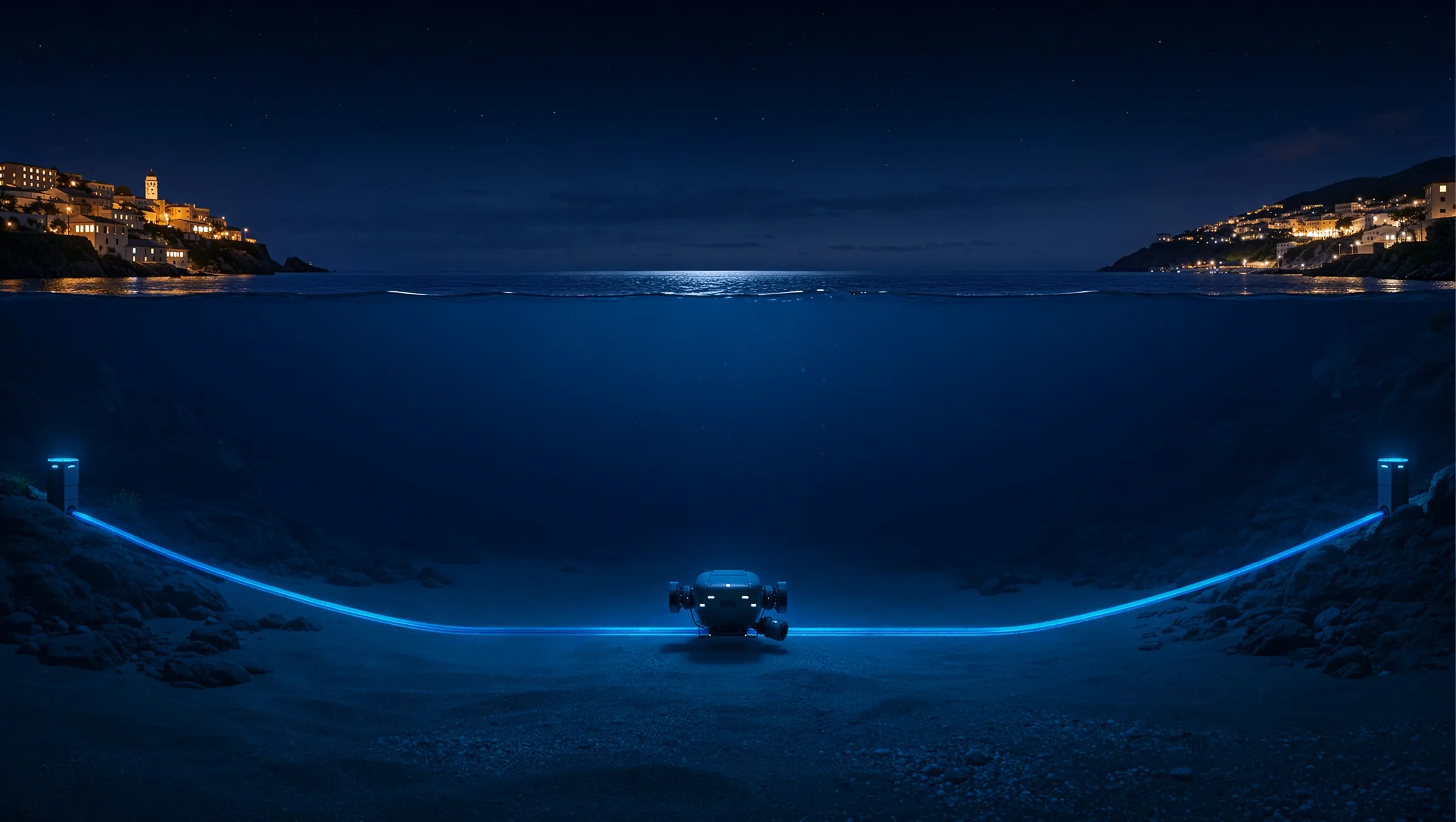
A cable on the seabed links two towns across the water, and a device that taps the traffic sits beside it. With today’s encryption, neither the sender nor the receiver can tell when the traffic is copied. The copies can be kept and may be broken with a quantum computer in the future. If keys are delivered as quantum states, the two ends notice the moment someone tries to copy them, and that key is never used. The key itself is no longer something that computation can crack. The scene imagines a future with communication that resists both tapping and code-breaking.
The role of quantum technology
The public-key encryption in wide use today rests on the difficulty of computations such as factoring large numbers, and it is known that a large quantum computer would break it. This raises the concern that encrypted traffic is being collected now to be decrypted later. Quantum key distribution uses the fact that quantum states cannot be copied and are disturbed by measurement to detect tapping while a key is being delivered. In 2020 an experiment was reported in which a satellite distributed entanglement and two ground stations 1,120 kilometers apart produced keys without trusted relays. The key rate was 0.12 bits per second; raising the rate and extending the distance with quantum networks on the ground remain challenges. Post-quantum cryptography, which uses computations thought to be hard even for quantum computers, is also being standardized as a countermeasure, and the first three standards were issued in the United States in 2024. Quantum key distribution separately needs a way to confirm that the other party is genuine. The rows of 0s and 1s and the code-breaking in the picture are schematic.
Entanglement-based quantum key distribution over 1,120 kilometers (Nature, 2020)What the animation shows
The same scene is shown twice, one above the other. The top is today’s encryption: encrypted traffic (white squares) flows along the cable and is copied by the device on the way, yet the check at the two ends still reads “nothing wrong”. In the box on the right, a dark figure keeps the copies and later breaks them with a quantum computer. The bottom is a quantum key: the quantum states carrying the key (violet particles) are disturbed as they pass the device and turn red. The table in the middle shows the results measured by the sender and the receiver; mismatches (red) appear, so the two ends notice the tapping and discard the key. In the box on the right, the copies mean nothing, and there is no problem for a quantum computer to solve.

Catching a tampered device from the measurement results alone
A head office and a factory are linked over a quantum network, with a number of communication devices in between. Even if someone has tampered with one of them, the head office and the factory at the two ends can tell by measuring entanglement and checking how well their results agree. If the agreement falls short of the threshold, no keys are made over that path. The scene imagines a future in which secure communication can start without trusting what is inside the devices on the way or who made them.
The role of quantum technology
If the correlations between measurements on entangled particles exceed a limit known as Bell’s inequality, the results are guaranteed to be unknown to any third party, without assuming how the devices work. Device-independent quantum key distribution, which uses this, was demonstrated in 2022 between two ion traps about two meters apart: about 95,000 key bits were produced from about 1.5 million entangled pairs over eight hours. Extending the distance between sites and raising the key rate remain challenges. In theory, tampering with a device on the way is caught in the same manner; the 2022 experiment had no devices in between. The guarantee assumes that measurement results do not leak out of the sites. The rows of 0s and 1s in the picture are schematic; the actual test uses the statistics of many results taken with varying measurement settings.
Demonstration of device-independent quantum key distribution (Nature, 2022)What the animation shows
The same scene is shown twice, one above the other. At the top no device has been tampered with; at the bottom, one device on the way has. The bubble at the bottom looks back at what happened earlier: a dark figure tampering with the device. Before use, the head office and the factory at the two ends measure entanglement. The dotted lines are the entanglement handed on between neighboring devices, and the table in the middle sets the results at the head office and the factory one above the other as rows of 0s and 1s. In the top scene they all match and it reads “secure”. In the bottom scene mismatches (red) are mixed in and it reads “do not use”, so the users can tell. The measurement does not show which device was tampered with.
Computing on a distant quantum computer without showing the design
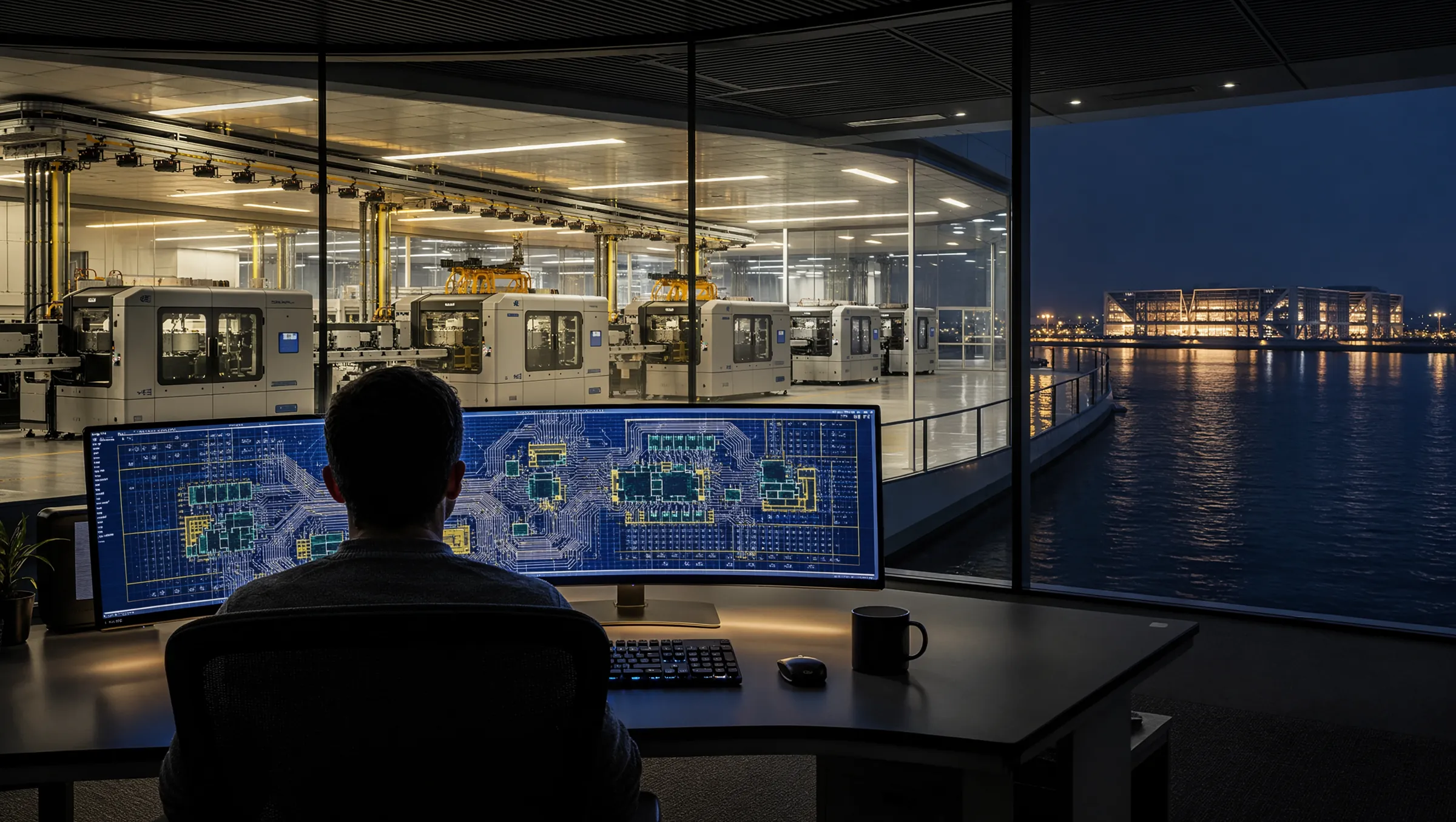
For example, a designer at a semiconductor company asks a computing center across the water to run a calculation on a large quantum computer the company does not have. The instructions for the calculation travel as quantum states, and at the computing center neither the operator nor an intruder can tell what is being computed. Only the result comes back. The scene imagines a future in which a company can use outside computing resources without letting its most advanced designs out.
The role of quantum technology
In blind quantum computing, the client exchanges qubits with the server over a quantum network so that the server carries out a computation without learning either the computation or the data. In 2024 a demonstration was reported that used a trapped-ion quantum computer and a client-side photonic detection system connected by optical fiber, and that also verified that the results were correct. Using this for practical design calculations would require large fault-tolerant quantum computers and quantum networks that reach them. The picture is schematic in showing the design data itself turning into quantum states.
Demonstration of verifiable blind quantum computing (Physical Review Letters, 2024)What the animation shows
The animation first shows an ordinary request: the design data goes to the computing center as it is, and in the inset at the top right the screen in front of the snooper shows the design in plain view. Then a yellow key appears at the desk. It stands for random numbers known only to the client, and it never leaves the desk. The instructions for the calculation, hidden with this key, travel as quantum states, shown as violet particles. This time the screen in the inset shows only a meaningless string of random bits, and magnifying it changes nothing. The result also returns hidden, becomes readable only at the desk that holds the key, and is applied to part of the design.
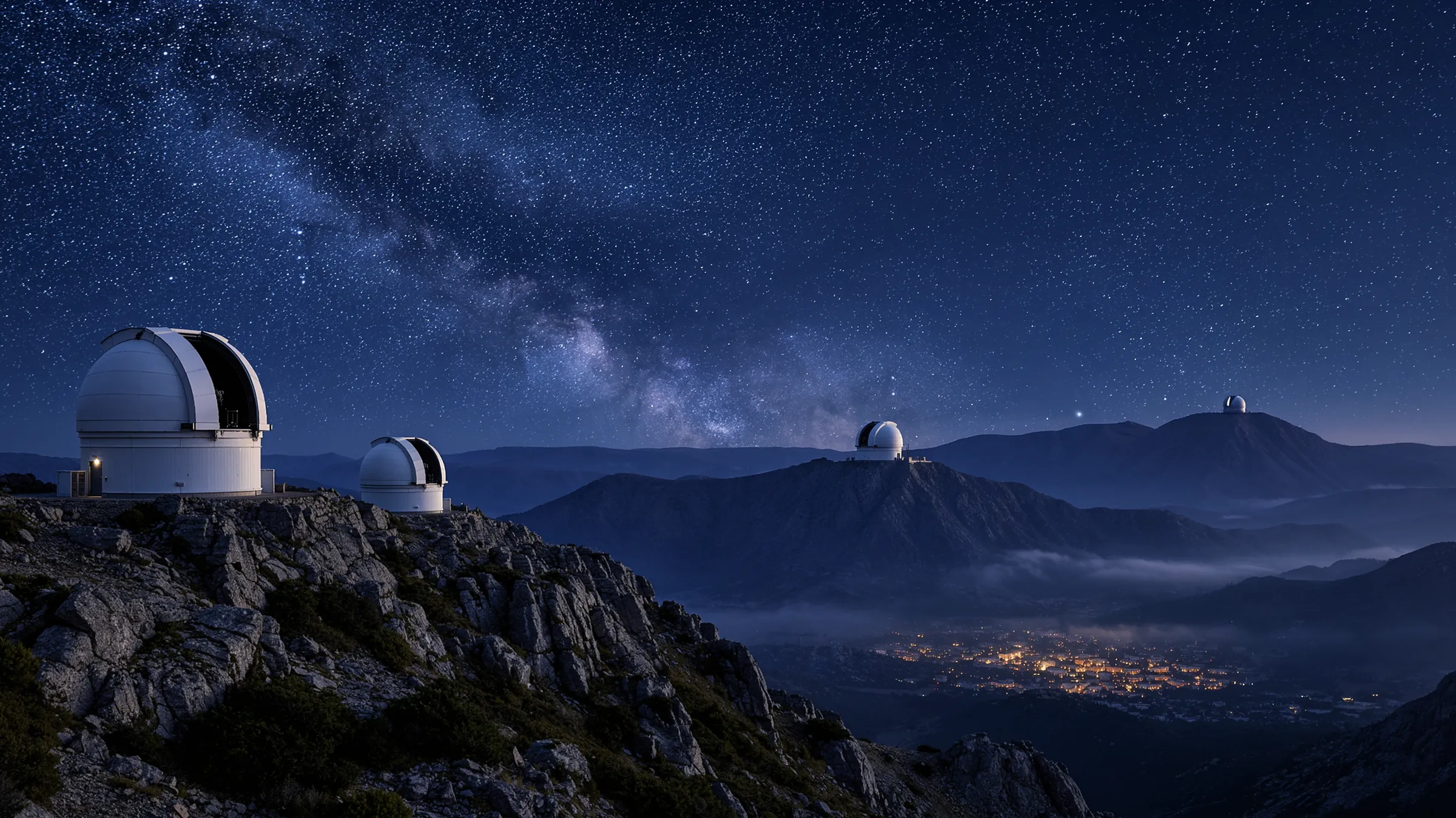
Linking distant optical telescopes with quantum technology into one giant telescope
Four observatories stand on separate ridges of a mountain range at night. The further apart telescopes are placed, the finer the detail they can make out. With radio waves, observation on the scale of the Earth is already possible, by recording the waves at each site and comparing them afterward. Light does not allow that. Starlight is faint and its waveform cannot be recorded, so the light itself has to be carried to one place and combined, which today limits the distance to a few hundred meters. If the telescopes share entanglement over a quantum network, the light no longer has to be carried. This scene imagines making out the surface of a star and a small body orbiting close to it.
The role of quantum technology
Experiments that entangle quantum memories to measure the phase of light at separate places have begun, over a distance of about 1.5 kilometers. Linking telescopes hundreds of kilometers apart needs quantum repeaters to distribute entanglement over long distances, and no timescale can be given. The distances shown are rough guides, and the appearance of the star is schematic.
Proposal to extend the distance between telescopes with quantum repeaters (paper)What the animation shows
Starlight (yellow lines) reaches the two nearest domes. They are joined by a white line, bringing the light together in one place. The star in the inset at the top right is a blurred patch of light, and the distance between the linked telescopes is shown beside it. When the white line is extended toward the middle ridge, it fades out on the way. Instead, purple dotted lines span the domes, and a source at the middle of each sends entangled particles to both sides. As the middle ridge and then the far ridge are linked, the distance grows to tens and then hundreds of kilometers, and the star in the inset sharpens step by step. At tens of kilometers it becomes a disk with an edge and the small body beside it separates, though the spots on its surface are still smeared. At hundreds of kilometers even the small spots are sharp. Finally rings spread from the four domes as each makes its measurement.
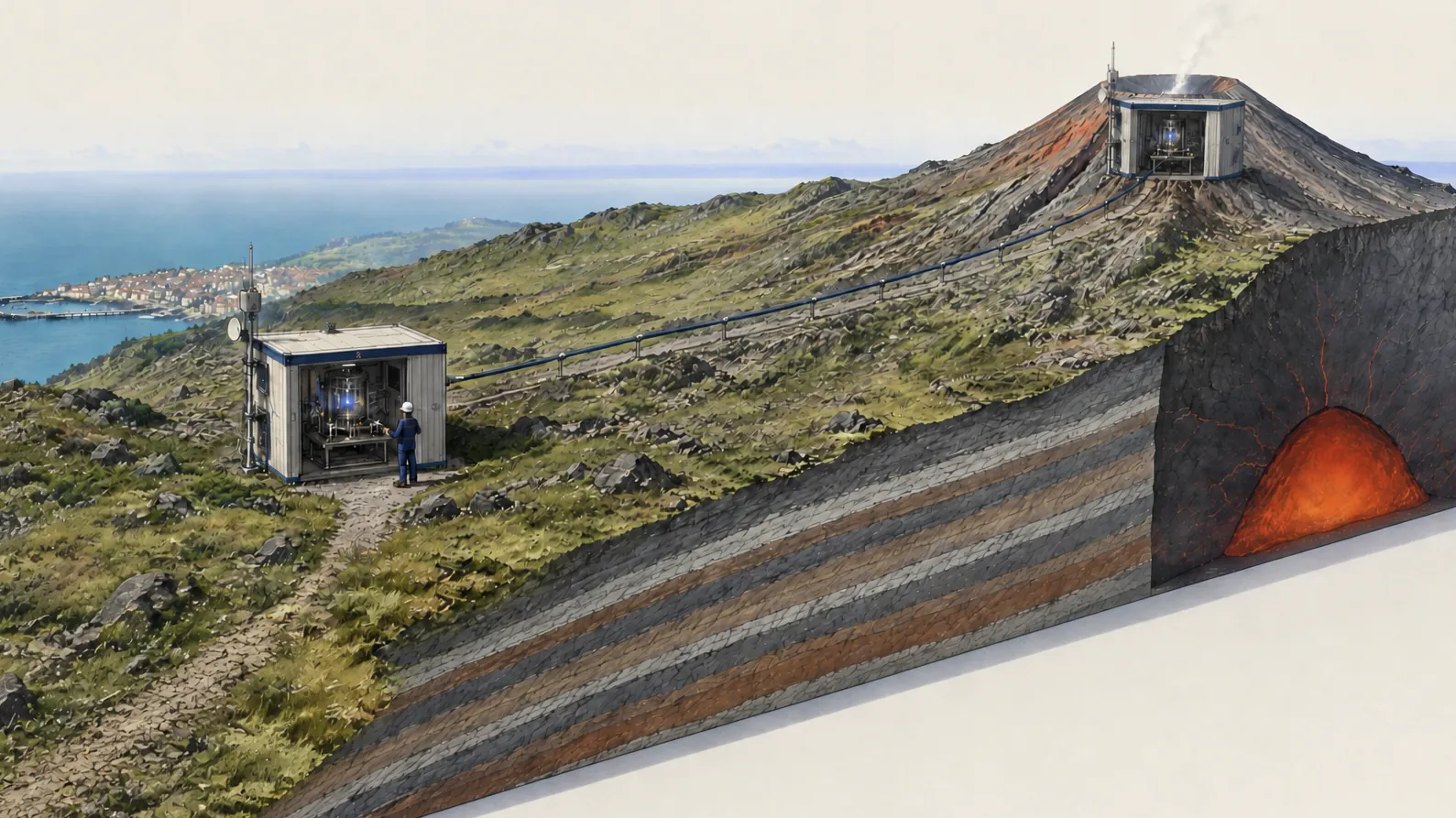
Seeing underground change as a shift in time
Two optical lattice clocks sit in observatories on the flank of a volcano and just below its crater. When gravity changes, time passes very slightly differently. By linking distant clocks with optical fiber and comparing them continuously, magma moving deep underground and the ground rising above it show up as a shift in time.
The role of quantum technology
Optical lattice clocks can measure the difference in the passage of time caused by a difference in gravity. Transportable clocks placed at the base and the observation deck of Tokyo Skytree measured the shift due to their difference in height. The precision corresponds to centimeter-level changes in elevation, and monitoring of volcanic activity and crustal movement is an anticipated application. Such clocks have not yet been used for routine volcano monitoring. The magma chamber and the size of the clock shift are drawn schematically.
Transportable optical lattice clock announcement (JST, in Japanese)What the animation shows
A clock dial appears above each observatory. They turn at the same rate at first. Then the magma chamber directly beneath the far observatory swells upward from its dotted outline, and that observatory’s clock gradually falls out of step. The yellow wedge is the difference; the light-blue hand shows where the other clock is.
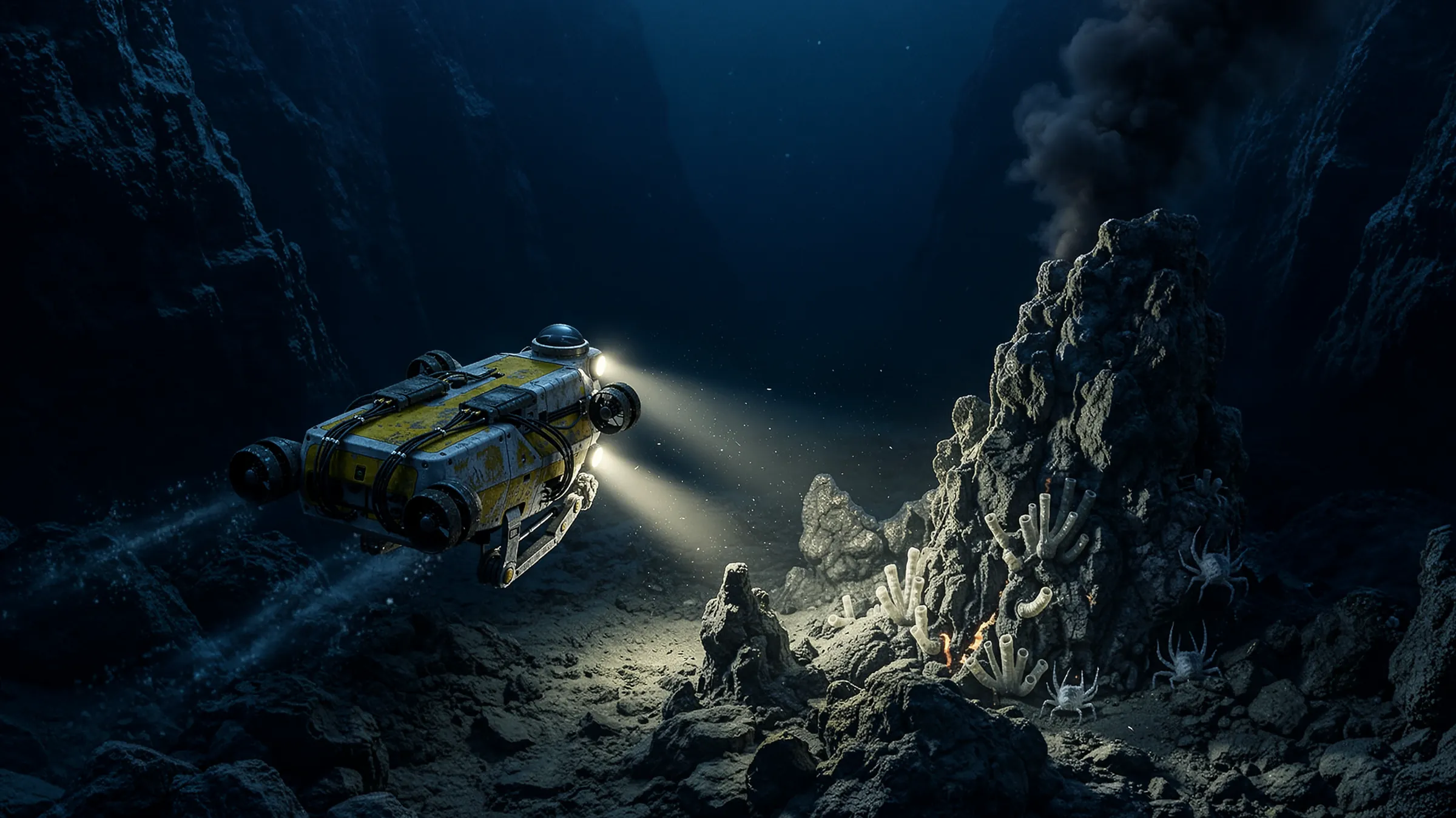
Where no signal reaches, a quantum sensor keeps track of position
An uncrewed vehicle makes its way along a dark deep-sea valley toward a hydrothermal vent. Satellite positioning signals do not reach under the sea, so the vehicle has to measure its own acceleration and rotation and add them up to know where it is. In today’s inertial sensors, the small error in each measurement builds up over time, and the longer the dive, the further the position drifts. This scene imagines a quantum inertial sensor, which measures motion with waves of cold atoms, holding position over long periods.
The role of quantum technology
A quantum inertial sensor uses the wave behavior of cold atoms. Every atom is identical, so the reference for the measurement is expected to drift little. Quantum sensors for navigation without satellites are now being tested on ships. Putting one on a deep-sea vehicle will need a smaller instrument that withstands motion. The size of the drift shown is schematic.
Royal Navy Arctic trial of a quantum sensor for satellite-free navigationWhat the animation shows
The inset at the top right shows the satellite signal stopping at the sea surface, short of the vehicle far below. A light-blue dotted line marks the planned route from the vehicle to the vent. The inset at the top center shows how a quantum inertial sensor works, with one cloud of atoms taking two paths and coming together again. The white line is the position estimated by a conventional inertial sensor. It moves away from the planned route as it goes, the circle showing its uncertainty grows, and it misses the goal, while the white bar for position error at the top left grows. Then the purple line shows the position estimated by a quantum inertial sensor. It stays on the planned route and reaches the goal, and the purple bar hardly grows.
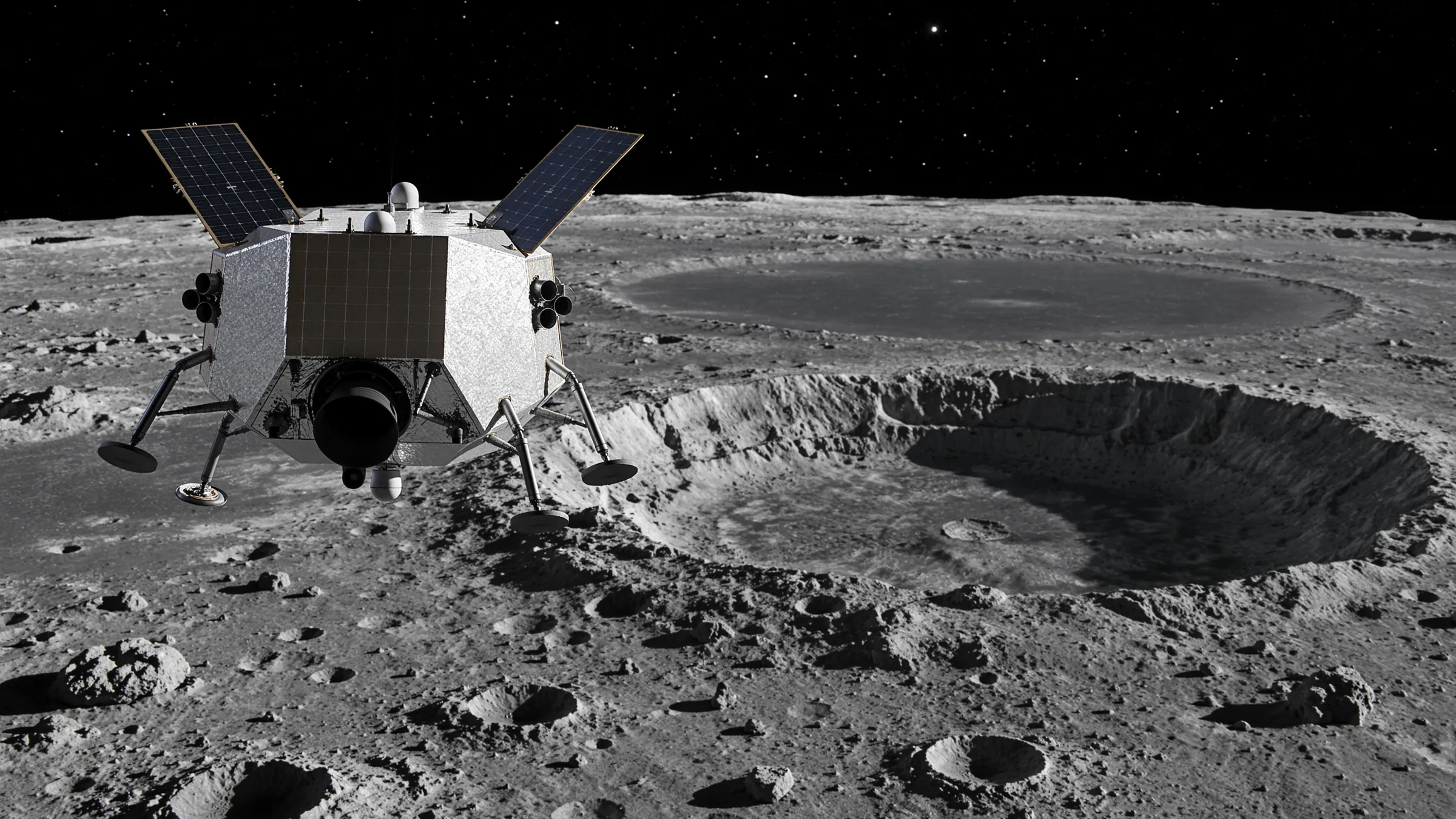
On the far side of the Moon, out of sight of Earth, a quantum sensor keeps the landing site in view
An uncrewed lander coasts above the far side of the Moon with its engine off. The Earth is not in the sky. Radio signals from Earth do not reach the far side directly, because the Moon itself is in the way, and the positioning satellites around the Earth cannot be used. While it is over the far side, the lander measures its own acceleration and rotation, adds them up to know where it is, and uses the result to decide when and in which direction to begin its descent. If the measurement is slightly off, the lander heads the same way but comes down away from the planned place. This scene imagines a quantum inertial sensor, which measures motion with waves of cold atoms, bringing the lander down where it was meant to land.
The role of quantum technology
In a real landing, cameras that look at the terrain are also used to correct the position. A quantum inertial sensor would be a way to hold position even when the terrain is hard to see. In space, a demonstration of a quantum inertial sensor began in 2025 on an uncrewed US Space Force spaceplane, and navigation between the Earth and the Moon is named as one of its uses. We have found no plan to use one for landing on the Moon. This scene imagines the same principle applied to a landing on the lunar far side. The size of the drift shown is schematic.
US Space Force announcement of a quantum inertial sensor demonstration in spaceWhat the animation shows
The inset at the top right shows the signal from Earth blocked by the Moon, short of the lander on the far side. A light-blue dotted line marks the planned path from the lander to the flat landing site ahead. The inset at the top center shows how a quantum inertial sensor works, with one cloud of atoms taking two paths and coming together again. The white line is the descent that follows the position estimated by a conventional inertial sensor. It heads the same way but moves little by little away from the planned path and comes down in the crater short of the site, while the white bar for position error at the lower right grows. Then the purple line shows the case of a quantum inertial sensor. It stays on the planned path and reaches the landing site, and the purple bar hardly grows.
Measuring gravity from space to see, basin by basin, where groundwater is falling
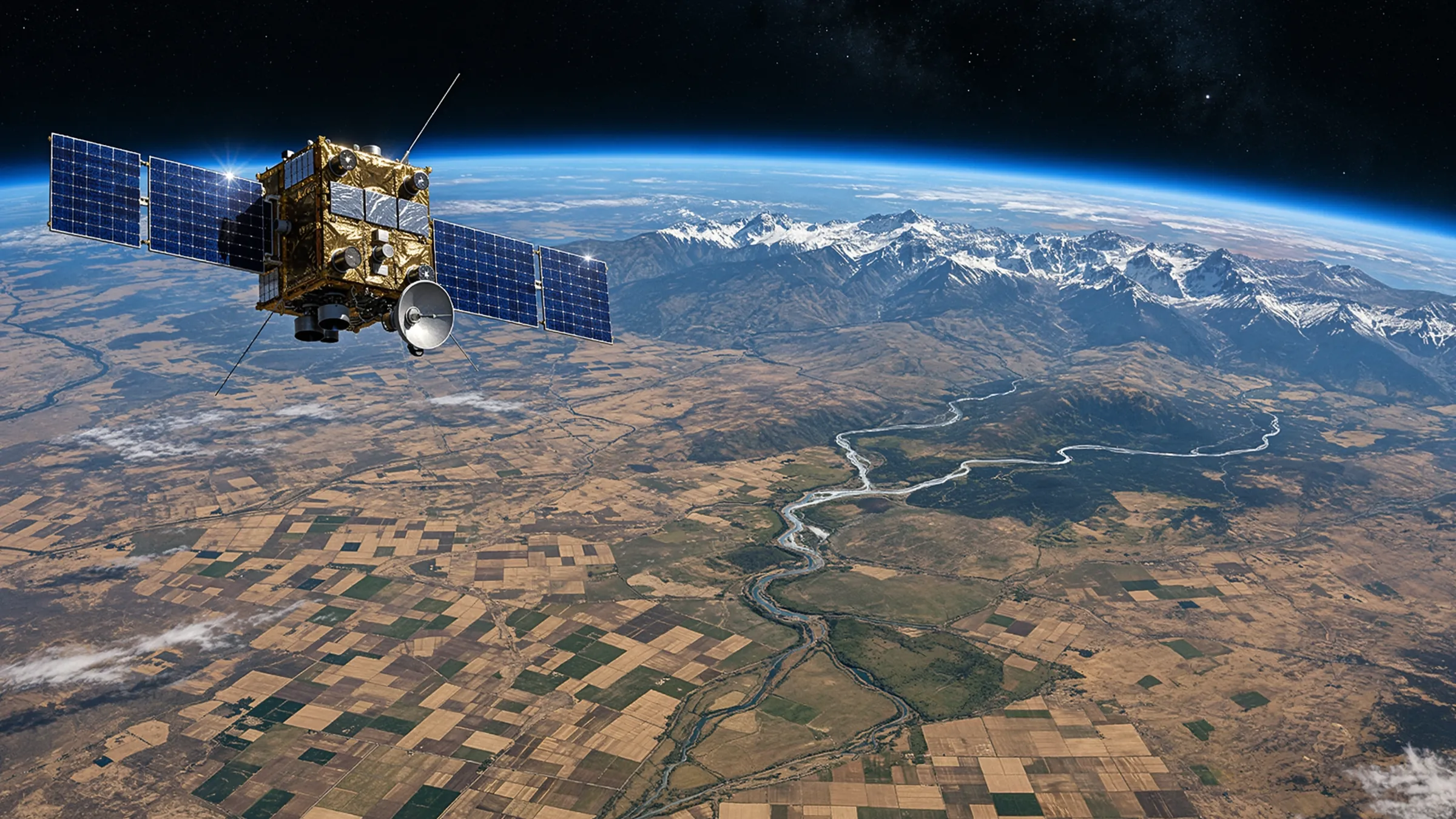
A satellite in orbit looks down on a plain of fields and a snow-covered mountain range. When groundwater or ice increases or decreases, gravity at that place changes very slightly. Keep measuring that change from a satellite, and the rise and fall of groundwater that no one can see becomes a map. Gravity satellites, flying since 2002, have revealed shrinking ice sheets and falling groundwater in many regions, but they can only tell apart areas hundreds of kilometers across. This scene imagines a quantum gravity sensor measuring more finely, showing which river basins are losing water so that water use can be reviewed early.
The role of quantum technology
A quantum gravity sensor drops two clouds of cold atoms a distance apart at the same moment and measures the change in gravity from the slight difference in how they fall. Every atom is identical, so the reference for the measurement drifts little even over long periods. A pathfinder satellite that will carry a quantum gravity sensor into orbit for the first time is planned for launch in 2030. A satellite good enough to observe groundwater will come later. The size of the squares and the pattern of colors shown are schematic.
Plan for a pathfinder satellite carrying a quantum gravity sensor (news report)What the animation shows
Colored squares showing the change in groundwater are laid over the ground below the satellite. Red marks a loss and blue a gain. At first the squares are large and every one is a pale, averaged color. The white line is the strip being measured at that moment. Then the inset at the top shows how a quantum gravity sensor works. Two clouds of atoms, one above the other, each take two paths and come together again, and the difference between the two results is measured. Finally the squares become finer, starting from the far side, and the places losing water (red) and gaining water (blue) separate clearly.
These are imagined scenes informed by research, not forecasts or research results. The illustrations are AI-generated, and the animated diagrams are schematic.
Activities
People
- Director
- Shota Nagayama (Associate Professor, Keio University Graduate School of Media Design)
- Project faculty
- Daisuke SakumaProject assistant professor
- Visiting researchers
- Kentaro TeramotoResearcher (Visiting Researcher), Quantum Future Society Design Research Center, KMD Research InstituteQuantum Internet Innovation Inc.
- Fumiyoshi KobayashiResearcher (Visiting Researcher), Quantum Future Society Design Research Center, KMD Research Institute
- Sho MorishitaResearcher (Visiting Researcher), Quantum Future Society Design Research Center, KMD Research InstituteELSI Center, The University of Osaka
- Yusuke NagatoResearcher (Visiting Researcher), Quantum Future Society Design Research Center, KMD Research InstituteELSI Center, The University of Osaka
- Mao NaritaResearcher (Visiting Researcher), Quantum Future Society Design Research Center, KMD Research InstituteGraduate School of Humanities, Kobe University
- Management staff
- Kento Oonishi
- Yasuyo Onari
- Students
- Students of Q/est (Nagayama Laboratory) take part in the center’s activities.
The center’s work is carried out jointly with Q/est (Nagayama Laboratory), one of KMD’s Real Projects. Q/est also conducts research on the quantum internet and quantum computing.